Provenance
The invented-archive system

Fourteen pieces.
One archive that never existed.

A specimen card, a luggage tag, a ledger page, a letter, a wax seal — fourteen different objects that look like they came out of the same forgotten institution. Same hand. Same paper. Same catalogue numbering. Built in about an hour, in a chat window you already pay for.

0distinct pieces
0invented sources
0object types
0specimens each
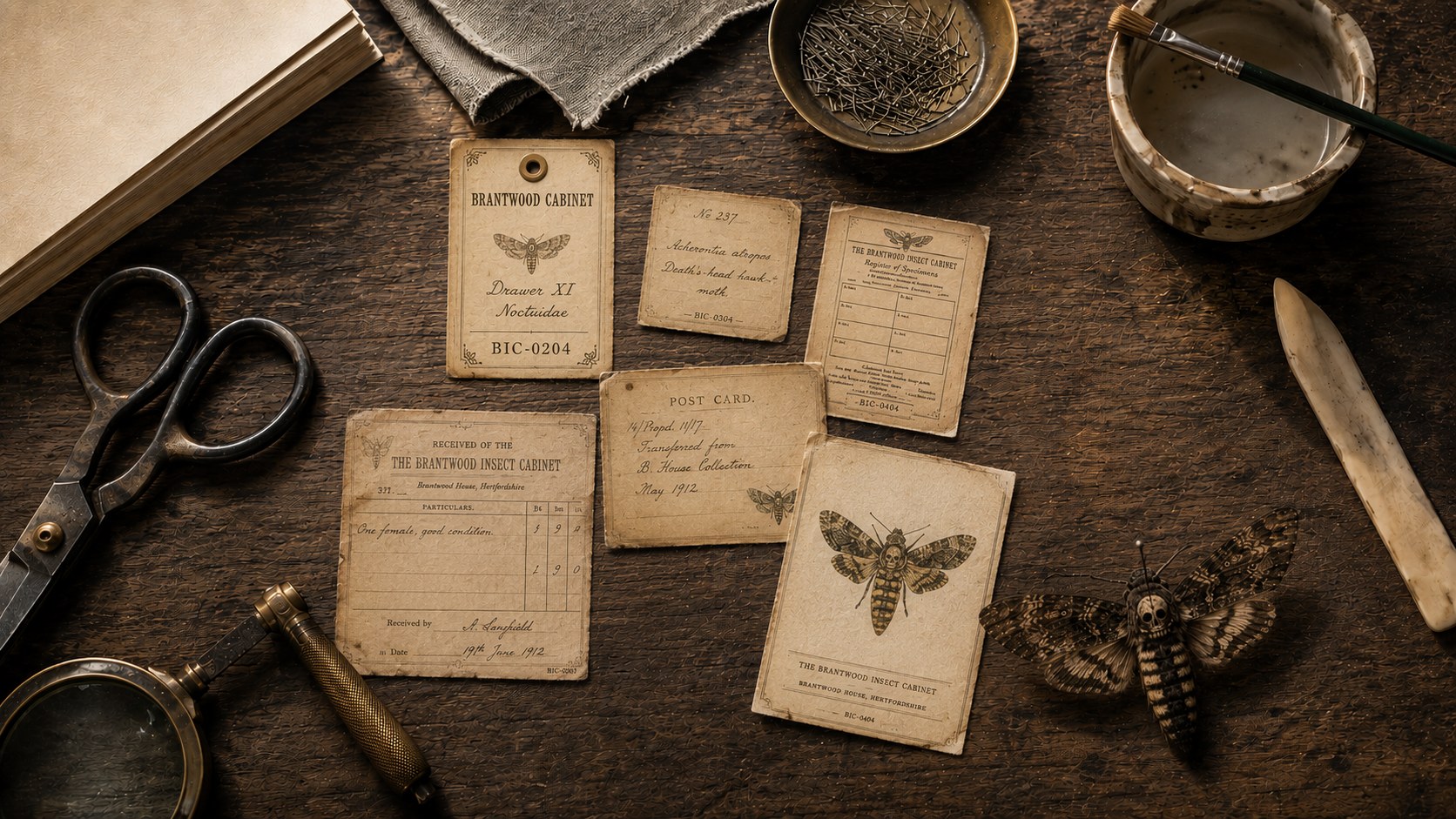
A bookbinder's table seen from above: scissors, a magnifier, a bone folder, a brass tray of pins and a glue pot around the edges. On the wood lie aged ephemera from an invented insect archive — a luggage tag, a specimen note, a register form, a receipt, a postcard and a cabinet card bearing a death's-head hawkmoth. A moth rests on the table at the right.

The Brantwood Insect Cabinet — one of the eight invented sources, on the kind of desk it was meant for.

Get Provenance — $17

Instant download · works offline · 30-day money back

Chapter one · the problem

The pieces are pretty.
The set is not believable.

Ask any image model for "vintage Victorian botanical ephemera" and you get something lovely. Ask it fourteen times and you get fourteen lovely things that have nothing to do with each other — a different hand, a different paper, a different century, numbers that mean nothing at all.

Buyers cannot always name what is wrong. They just do not believe it, and they scroll on.

A real archive is not a style. It is a place, a person and a filing system — and it shows up on every single piece.

See how it is fixed →

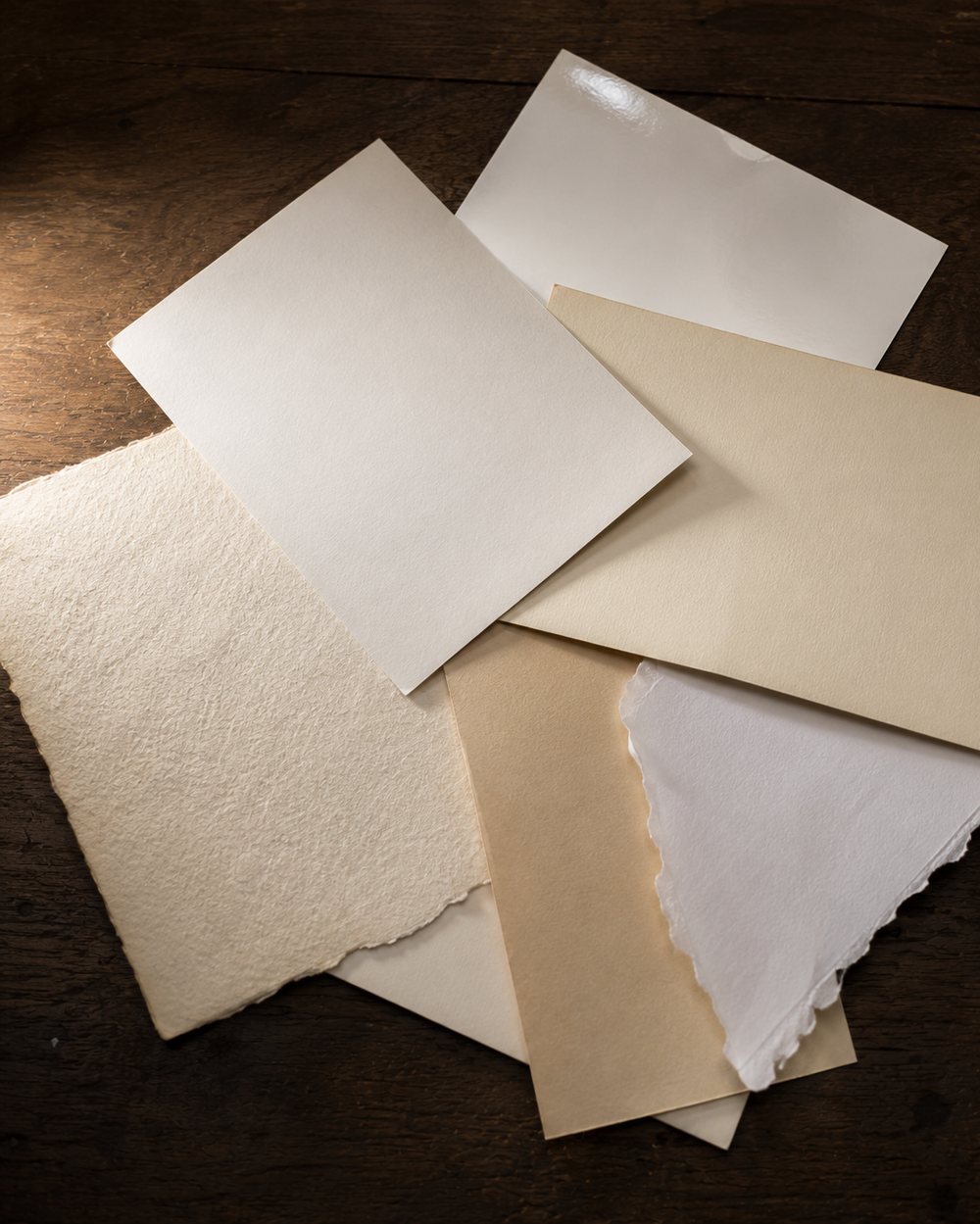
Blank paper scraps scattered on dark wood: different whites and creams, different thicknesses, one torn, one machine-cut, overlapping at clashing angles

Chapter two · the mechanism

Lock the identity. Release the density.
Add the history.

Three moves. Everything in this system is one of them.

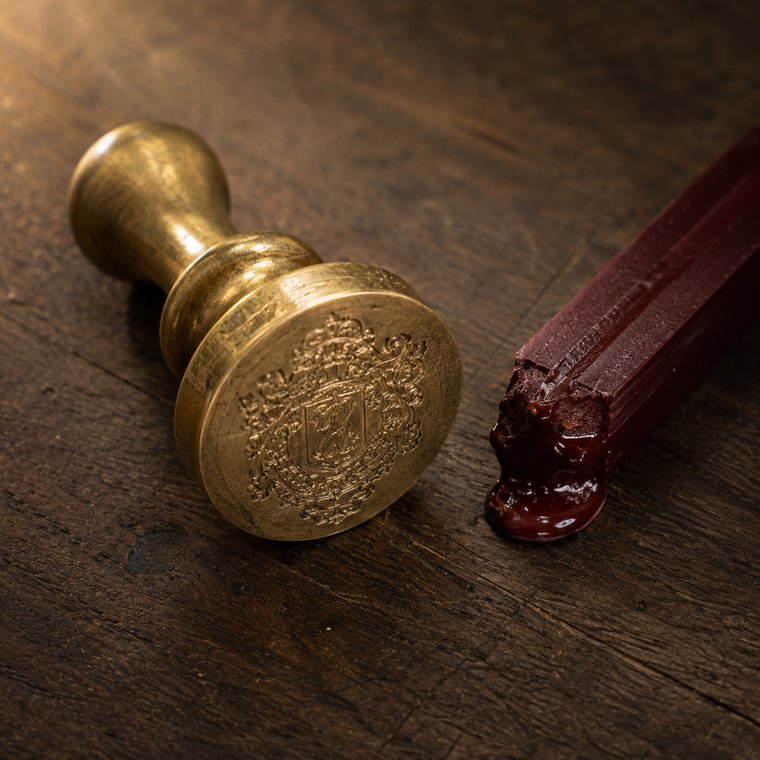
A heavy brass seal matrix lying beside a stick of dark red sealing wax on oak
One · Lock

The Provenance Block

Eight sections that define an invented institution once — who kept it, where, the hand, the paper, the palette, the catalogue prefix, the emblem, the drawing style. Pasted once at the top of a chat, every object after it inherits the lot without you repeating a word.

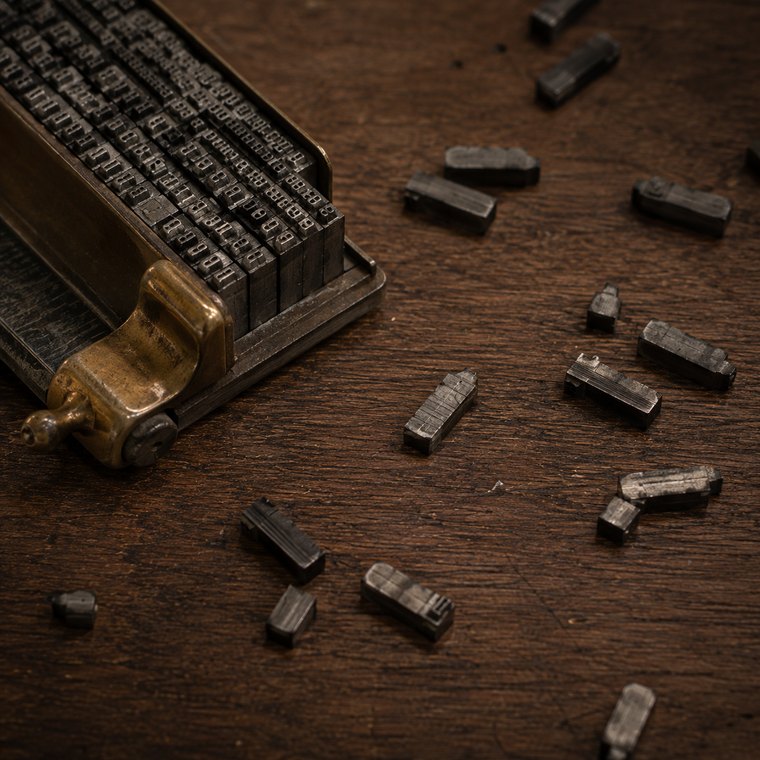
A printer's composing stick holding a dense block of metal type, with loose sorts scattered widely across the wood beside it
Two · Release

Density per object

A ledger page is packed. A luggage tag is nearly empty. Most sets fail because every piece carries the same weight of text. Each of the fourteen objects here has its own density, so a tag reads like a tag and a ledger reads like a ledger.

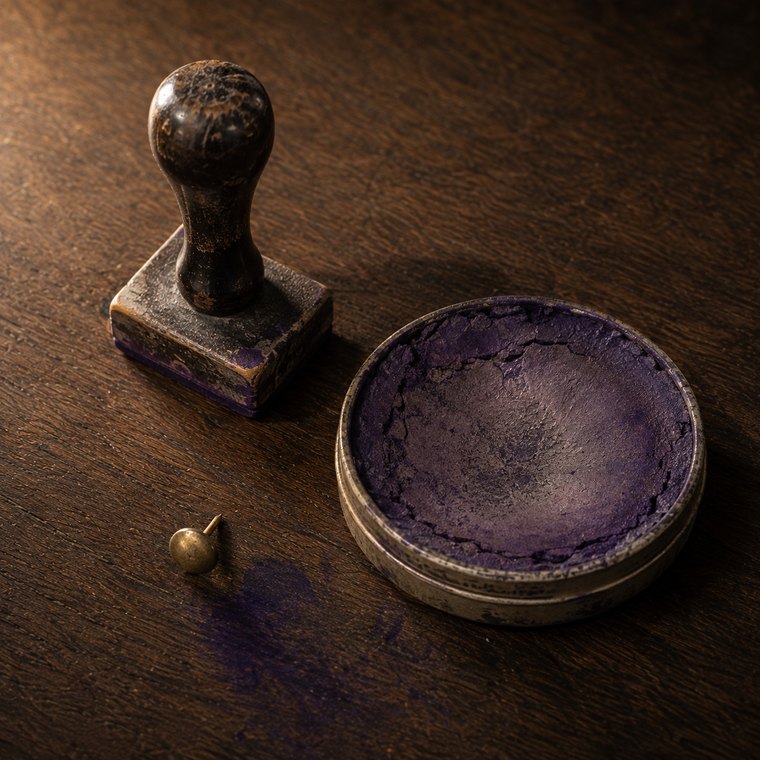
A worn rubber stamp standing beside a tin of dried purple stamp ink, with faint purple smudges on the wood
Three · Add

Later hands

Nothing in a real archive was made in one sitting. A correction slip glued at its top edge decades later, in a colder ink. An office stamp three degrees off square. Room left empty for the next correction. This is the part nobody else does.

Watch the emblem

One moth. Six objects. Same archive.

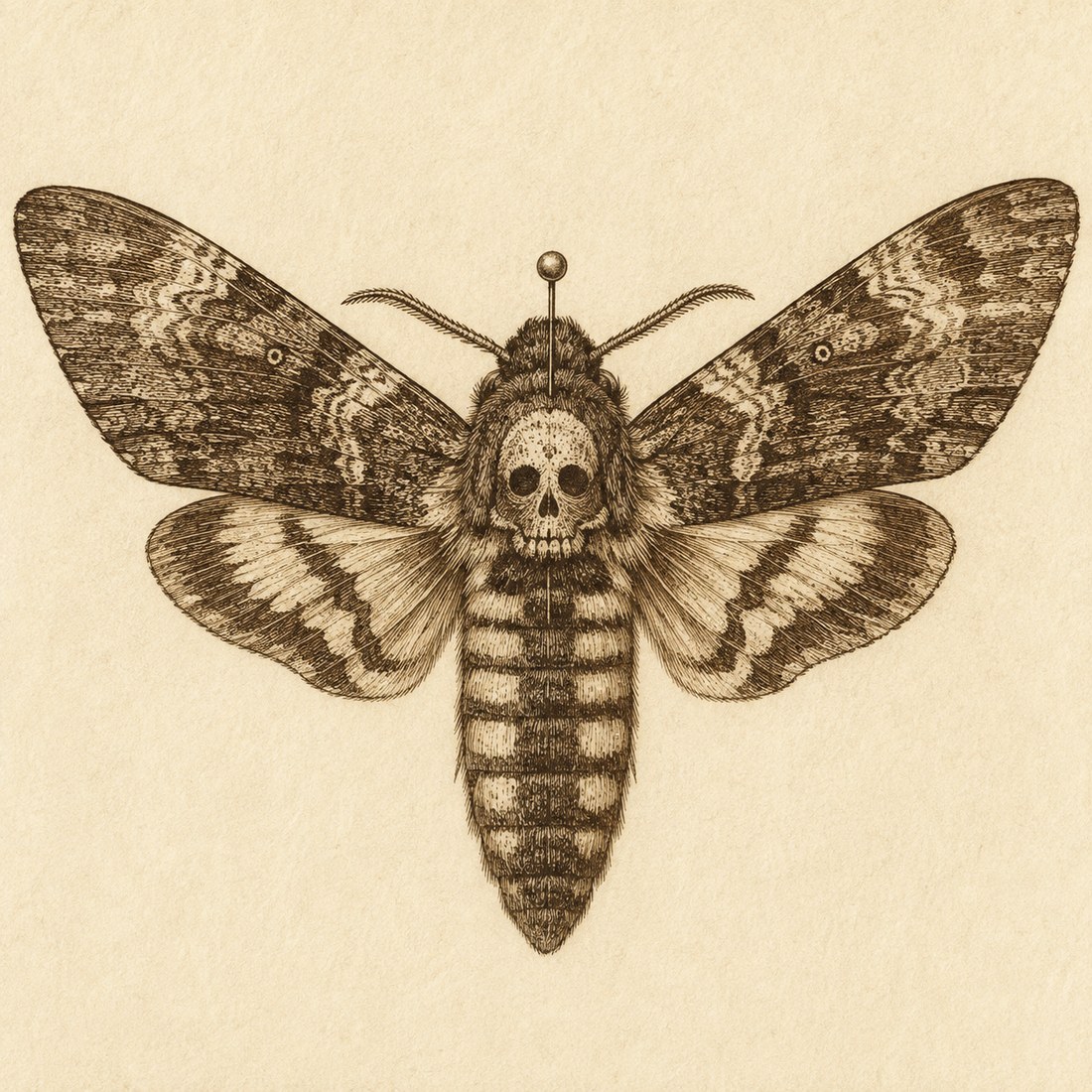
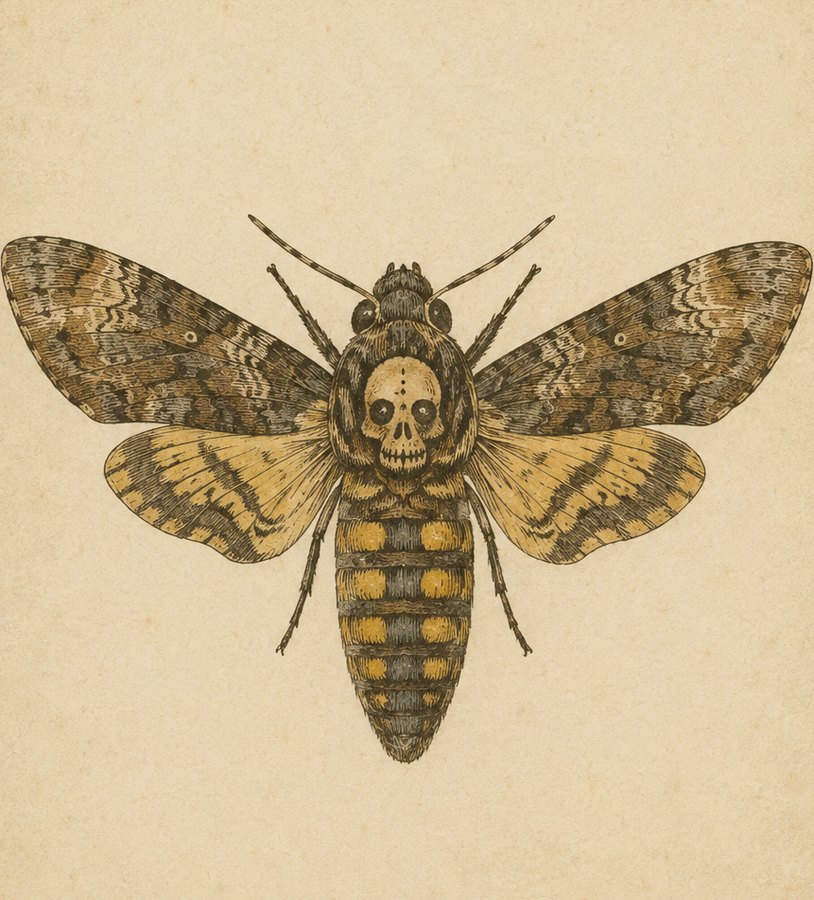
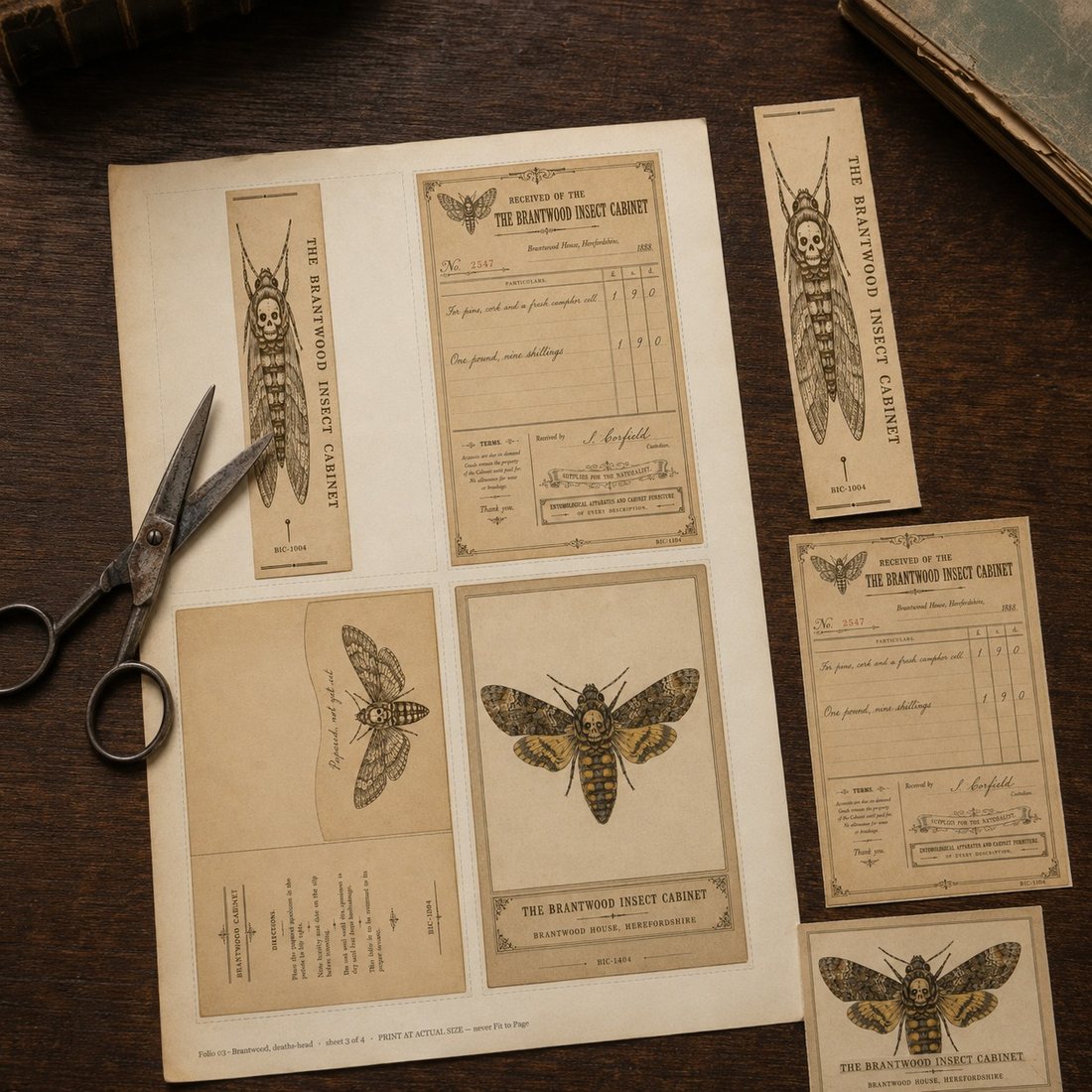
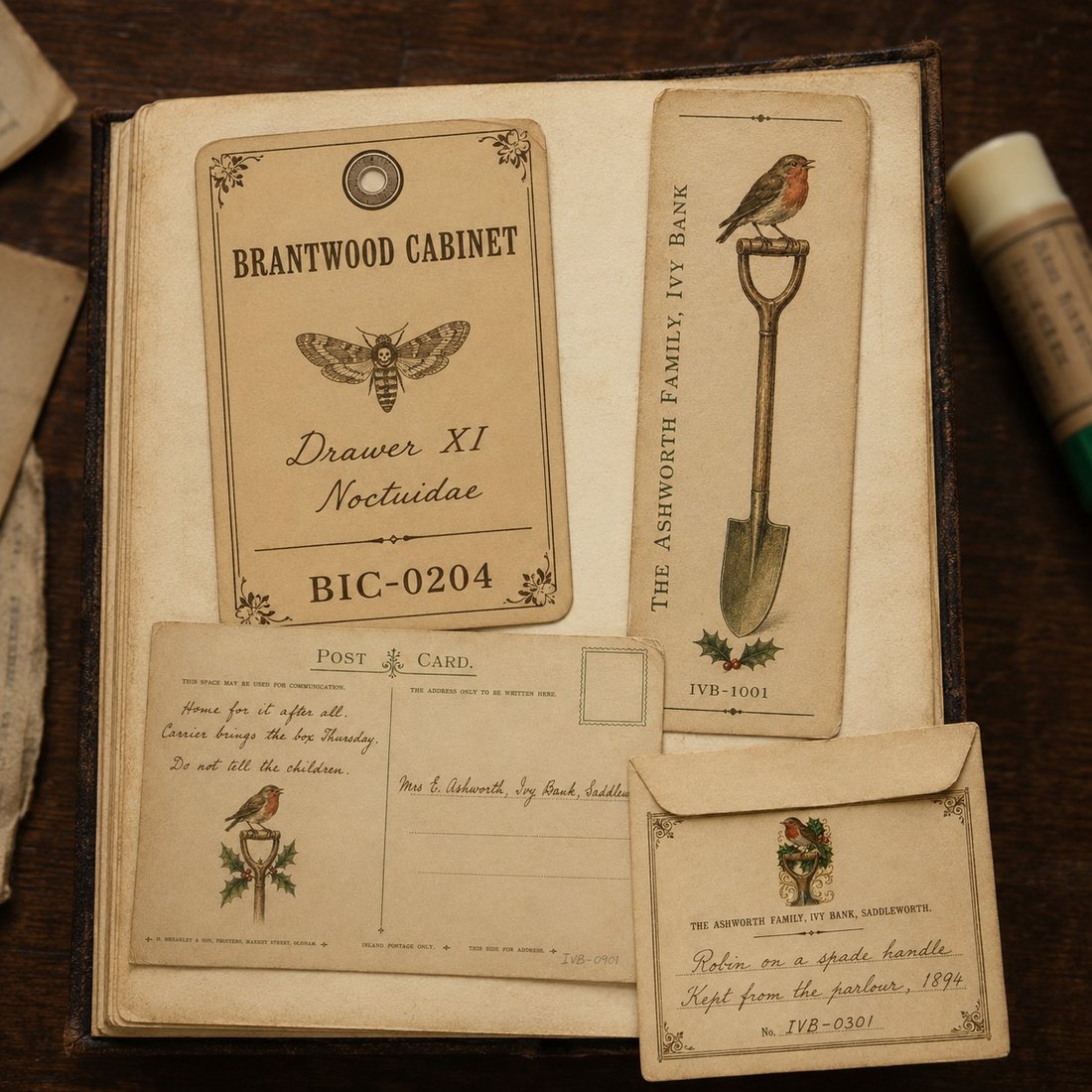
This is Atropos — the death's-head hawkmoth of the Brantwood Insect Cabinet. Every piece below is real output, and the moth is on all of them: pressed into wax, screwed to a drawer, printed on a ticket. That recurrence is the whole trick, and it is what a single prompt can never do.

Steel-engraved plate of a death's-head hawkmoth on cream paper, wings spread, an entomological pin through the thorax and the skull mark clearly visible
Atropos · Acherontia atropos · BIC-0104
Engraved death's-head hawkmoth with the skull mark on its thorax, printed on a cabinet card
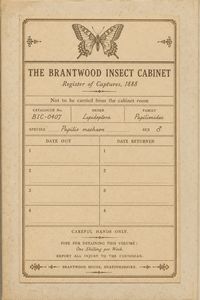
Cabinet card
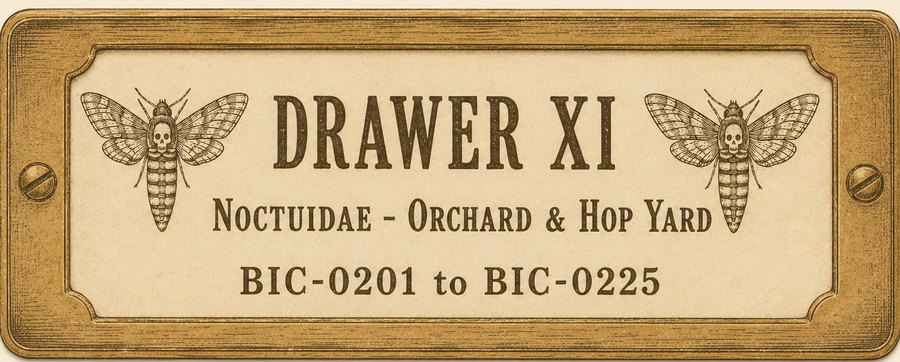
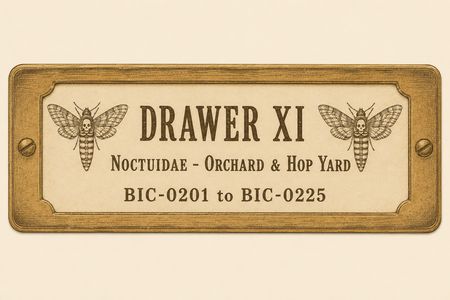
Brass-framed drawer label reading Drawer XI, with a small engraved moth at each end
Drawer label
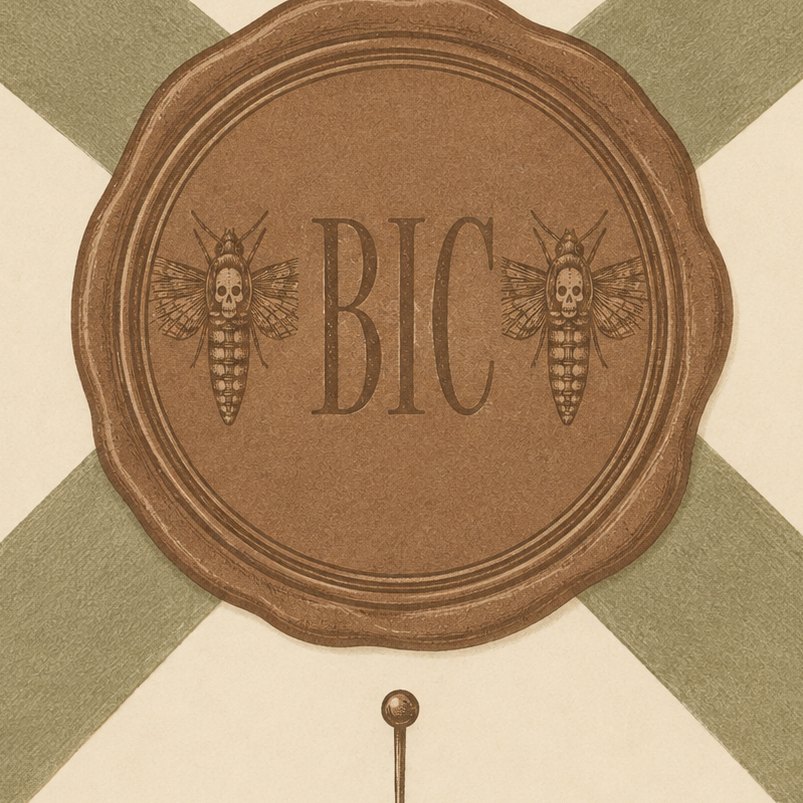
Red wax seal stamped BIC with two small moths flanking the monogram
Wax seal
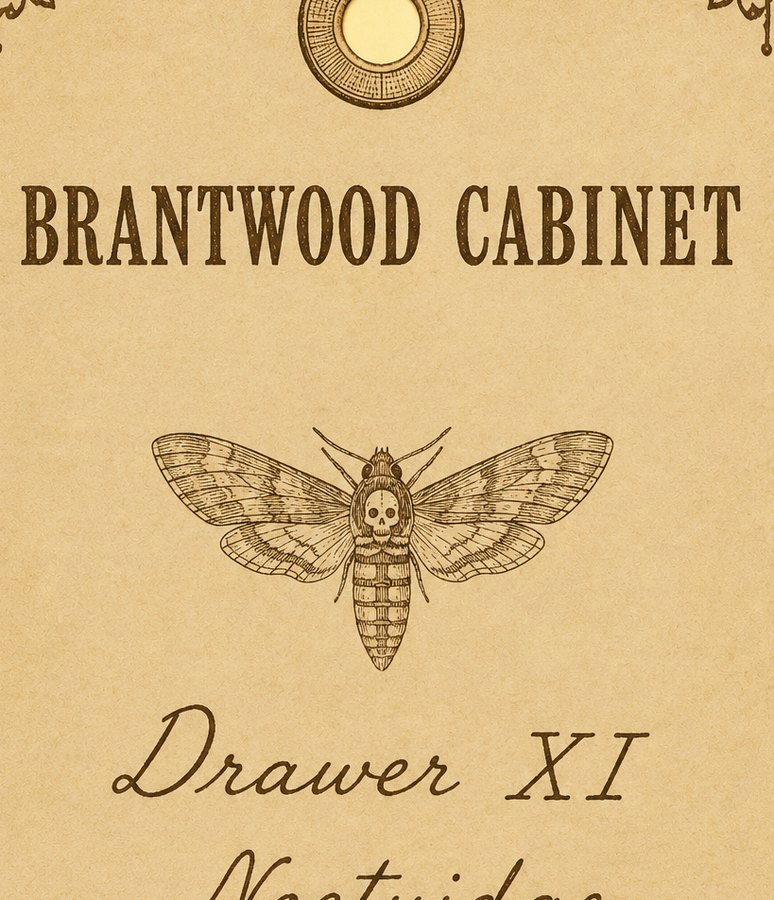
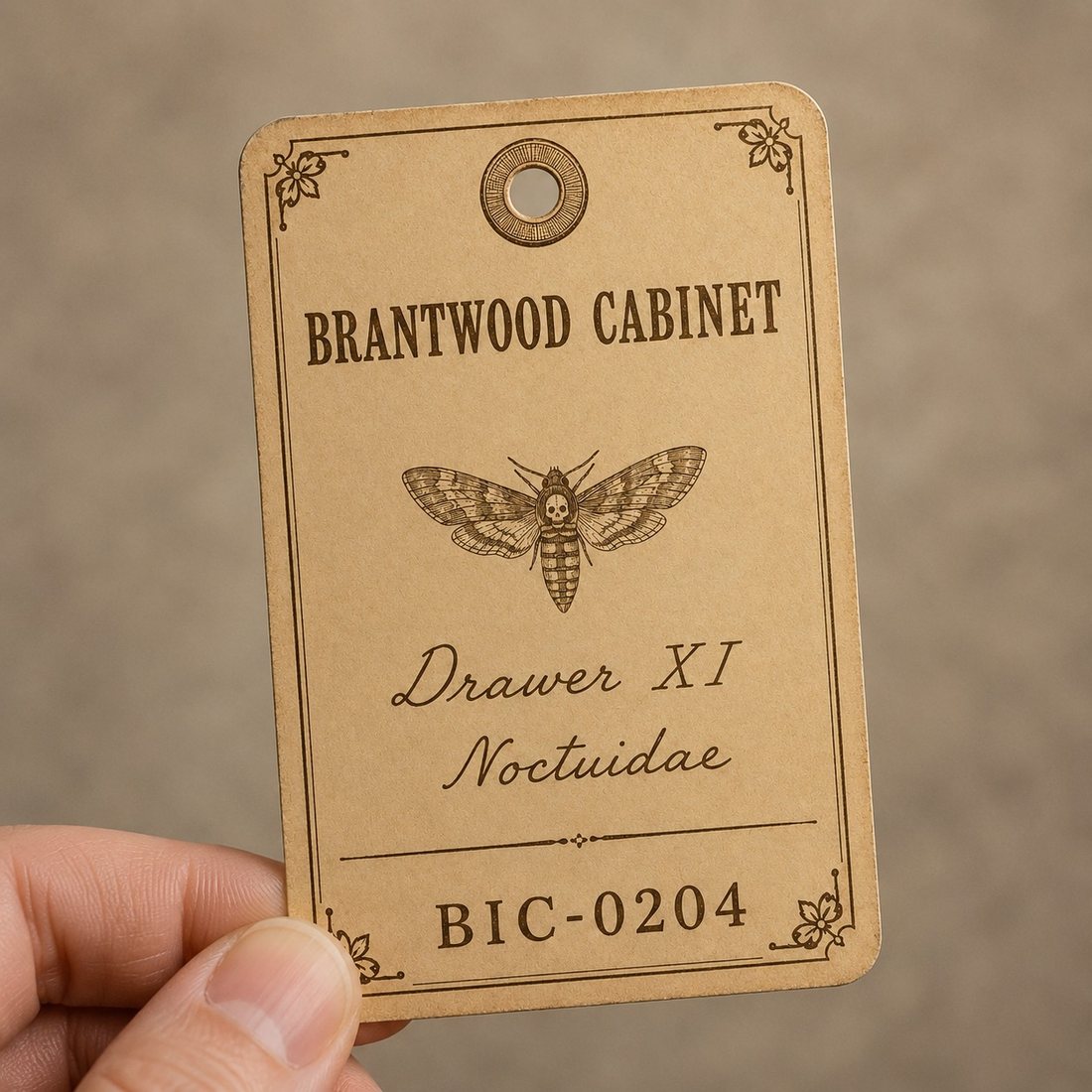
Luggage tag headed Brantwood Cabinet with an engraved moth beneath the heading
Luggage tag
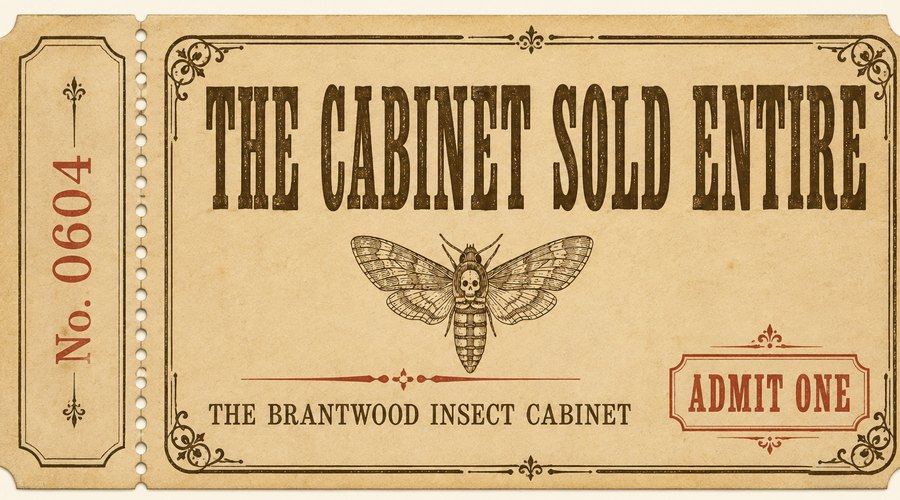
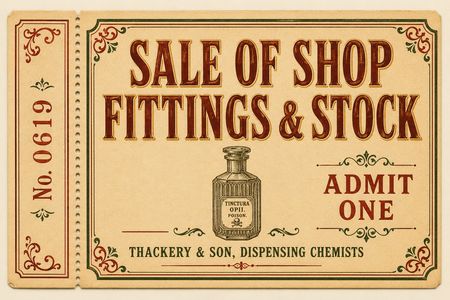
Admission ticket reading The Cabinet Sold Entire with a small moth above the wording
Admission ticket
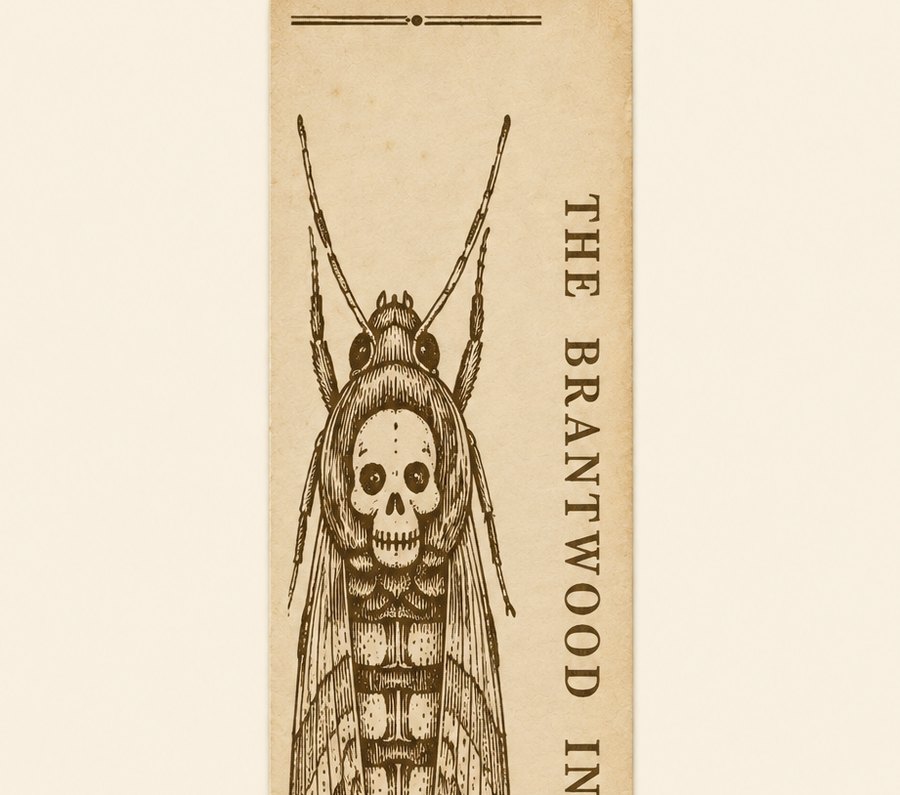
Tall printed bookmark with a large engraved moth seen head-on
Bookmark

Chapter three · the proof

A card that records a moth it no longer has.

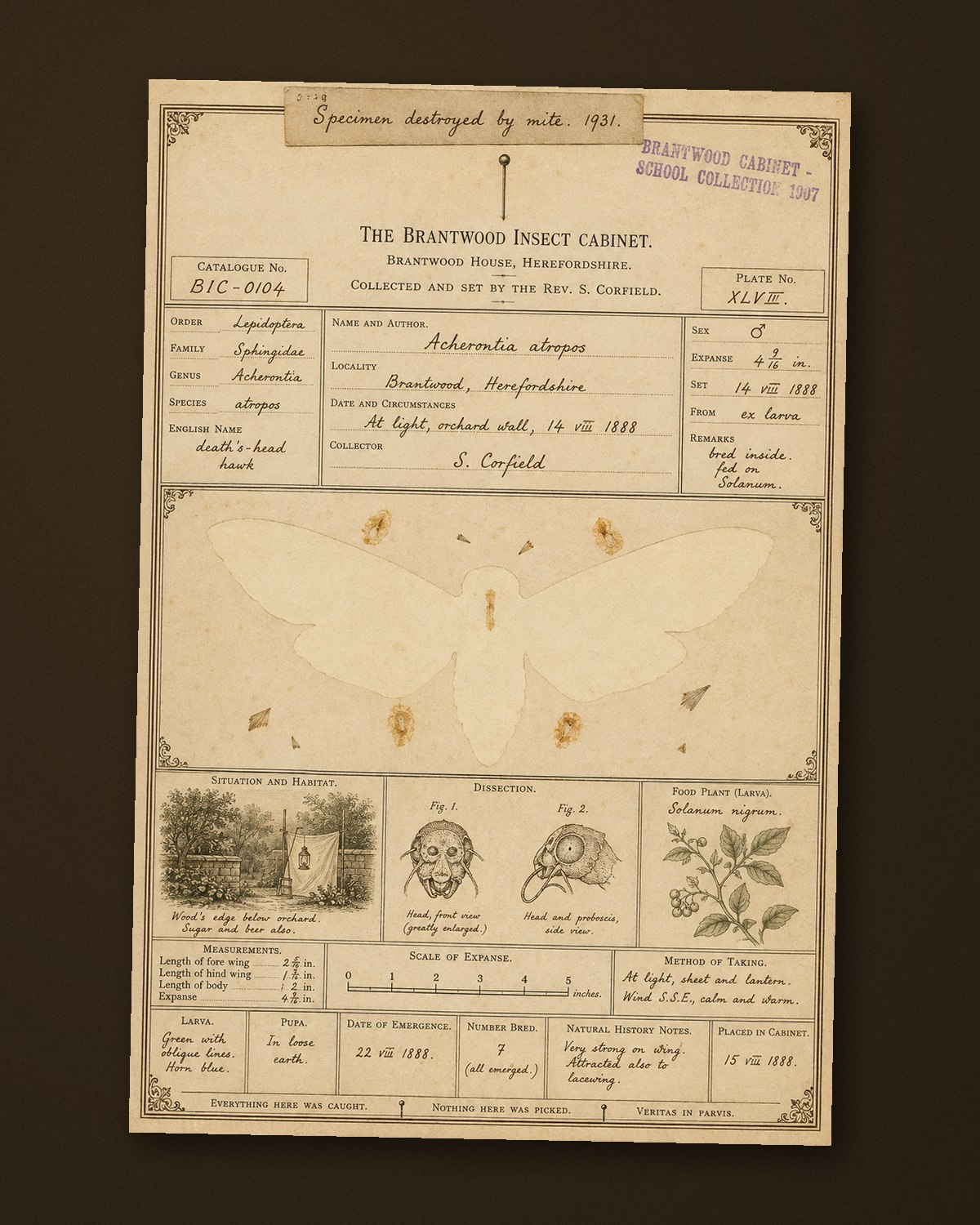
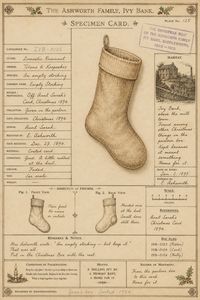
The pin is there. The plate number, the collector, the date, the remarks — all there, in a careful hand. Where the moth should be there is a pale outline where the paper stayed unfaded, four rust-ringed pin holes, and four fragments of wing.

Nothing on it is a ghost or a mourning device. It is a record that outlived its subject, which is what half the paper in any real archive is.

A market prompt has no vocabulary for a record of loss.

 The moth on this page is Atropos — the one missing from that card.

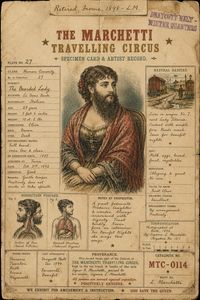
An entomology specimen card photographed on a dark surface: printed headings, a handwritten record of a death's-head hawkmoth, its pin still in place, and where the moth should be only a faded outline and four wing fragments

One specimen, fourteen objects

This is a folio.

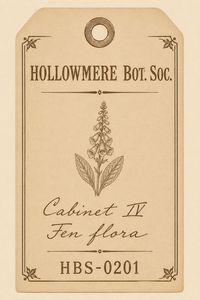
One source, one foxglove, one afternoon. Every piece below ships inside Provenance as a finished worked example. Tap any of them.

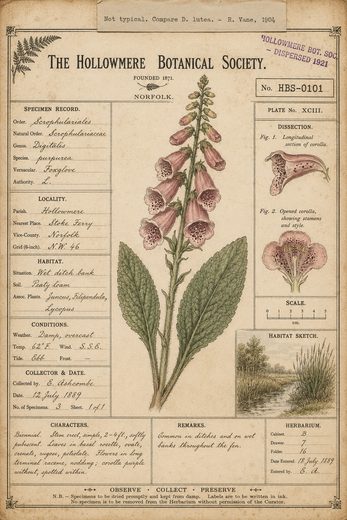
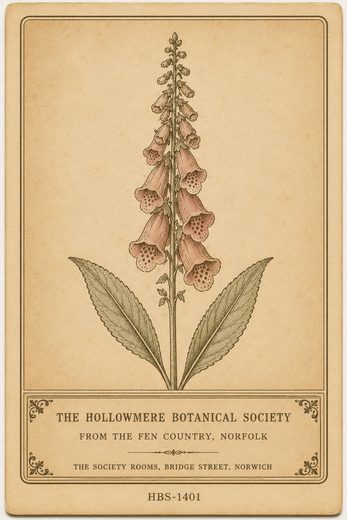
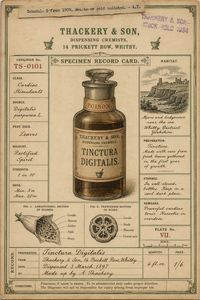
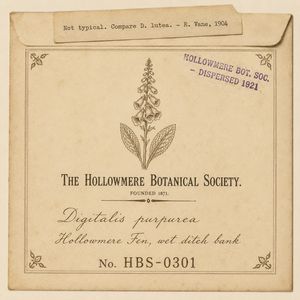
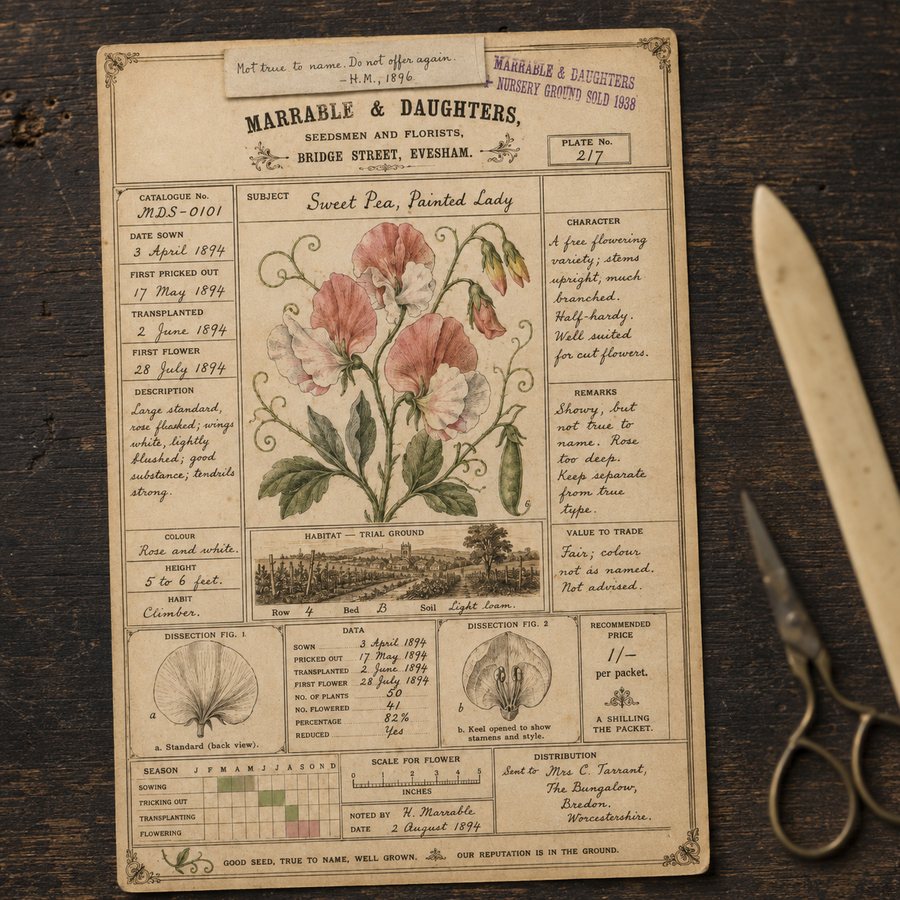
Botanical specimen card with a pressed foxglove and handwritten data
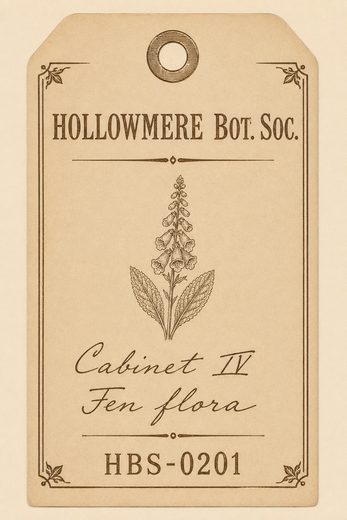
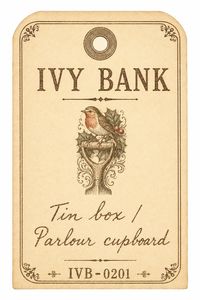
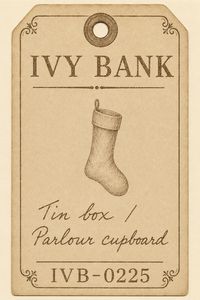
Luggage tag with an eyelet and catalogue number
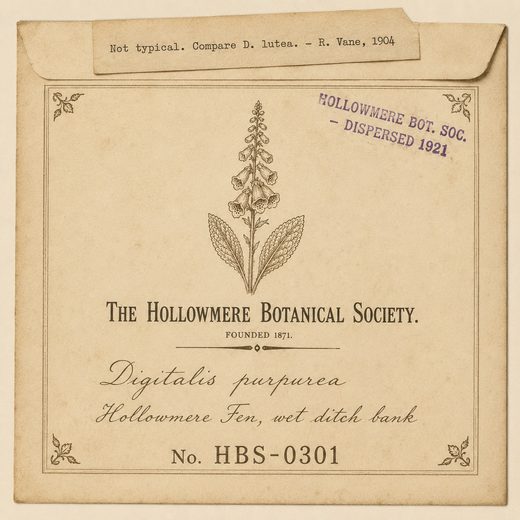
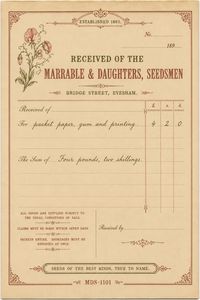
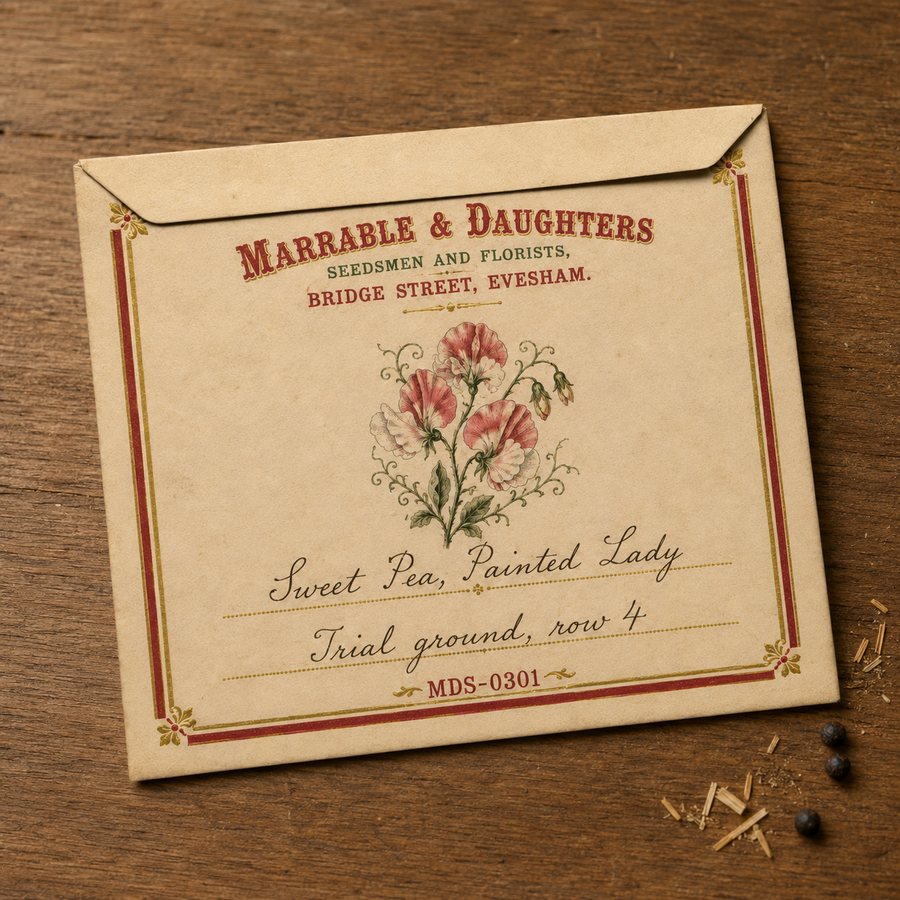
Seed sample envelope with printed heading
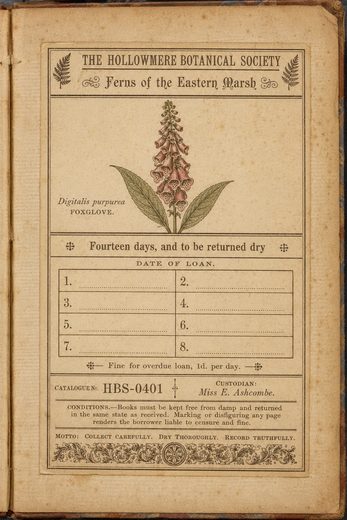
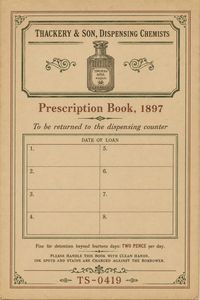
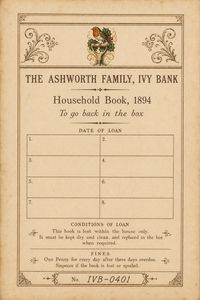
Library loan slip ruled in columns
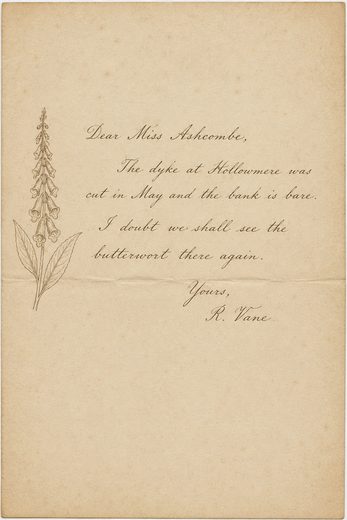
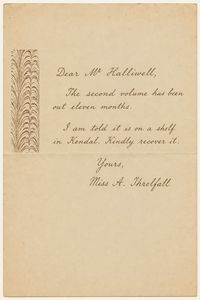
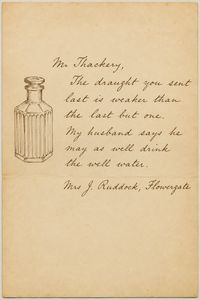
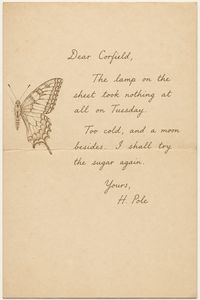
Handwritten letter on cream laid paper
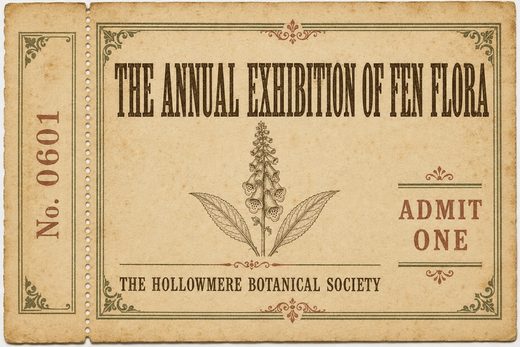
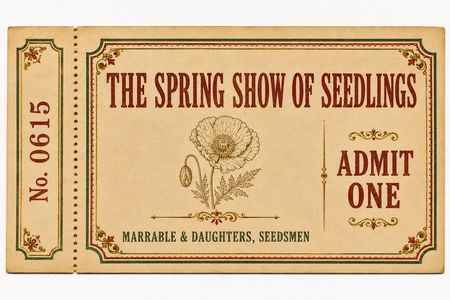
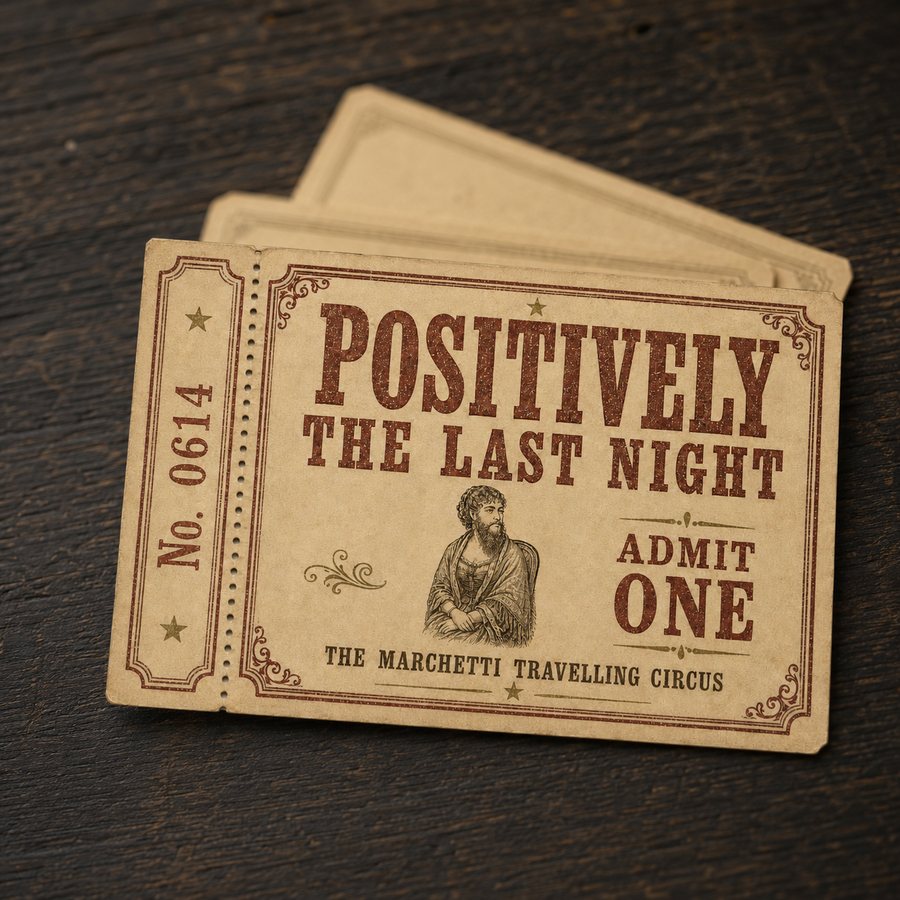
Printed admission ticket to an exhibition
Cabinet drawer label with an engraved border
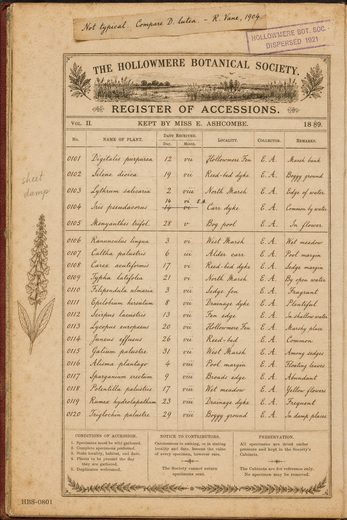
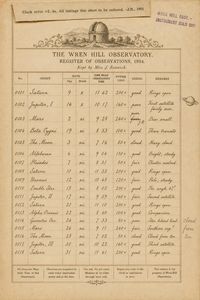
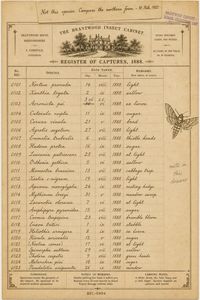
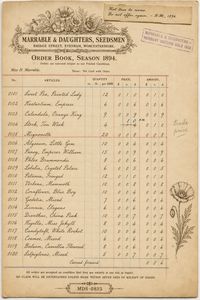
Ledger page ruled in columns with handwritten entries
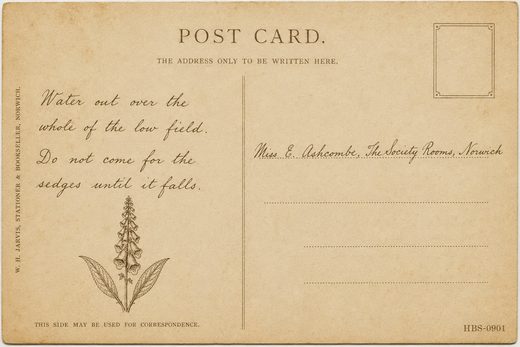
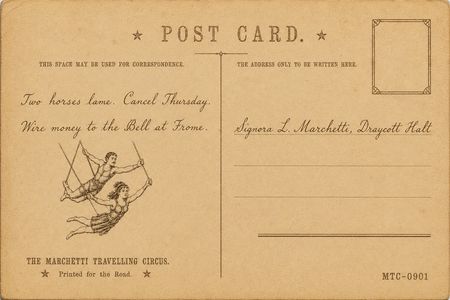
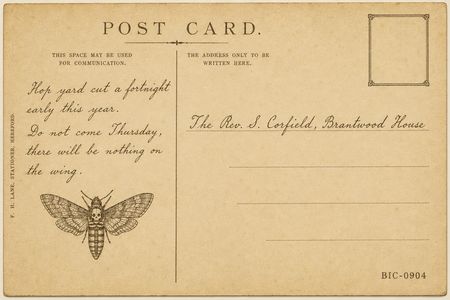
Postcard back with divided message and address panels
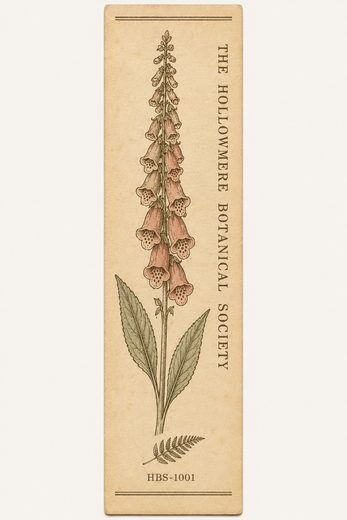
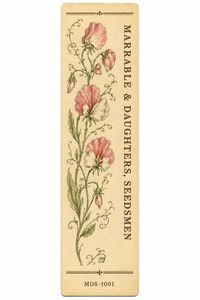
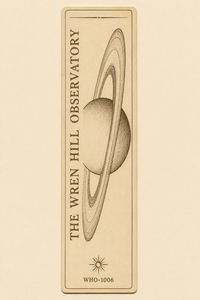
Printed paper bookmark, tall and narrow
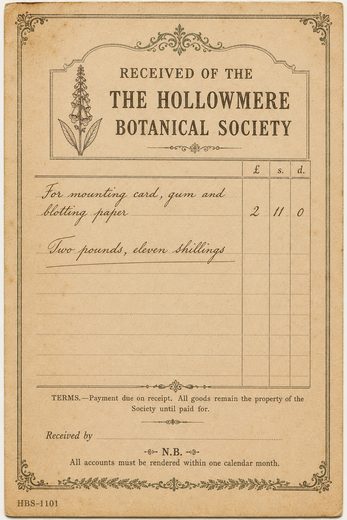
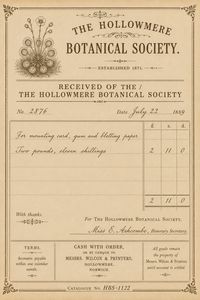
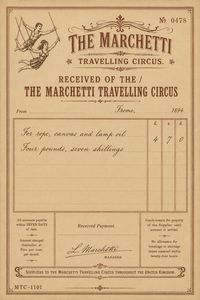
Chemist's receipt with pounds shillings and pence columns
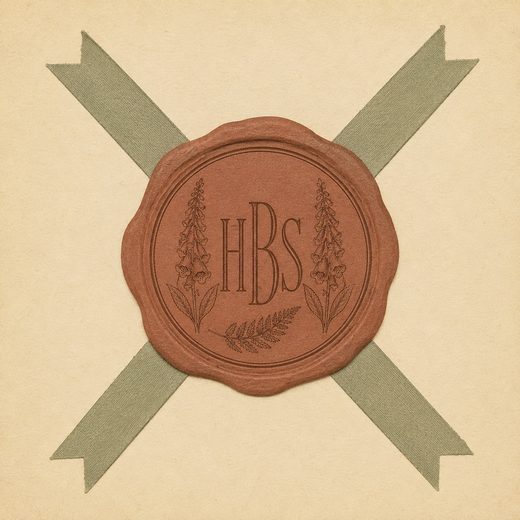
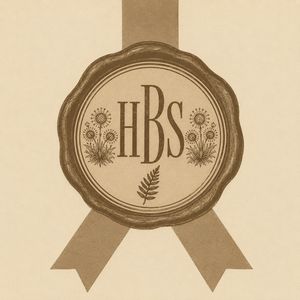
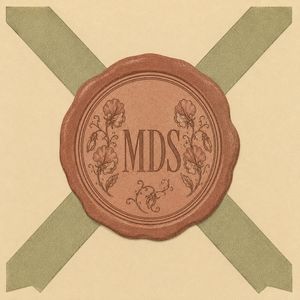
Wax seal with ribbon on a folded letter flap
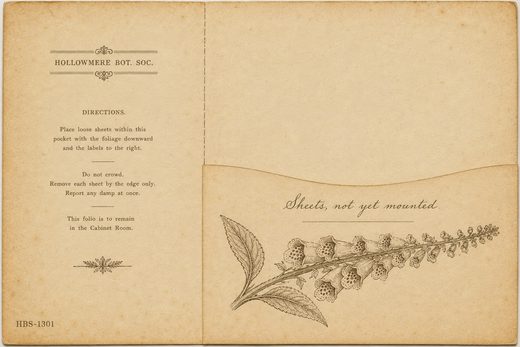
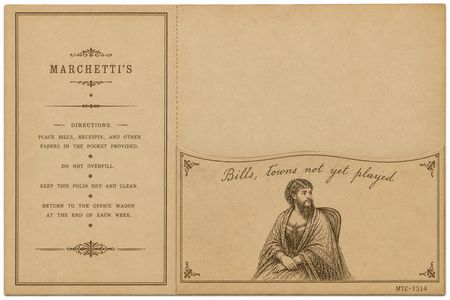
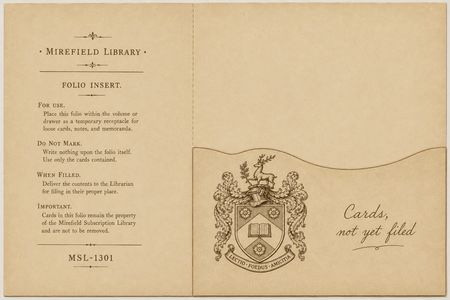
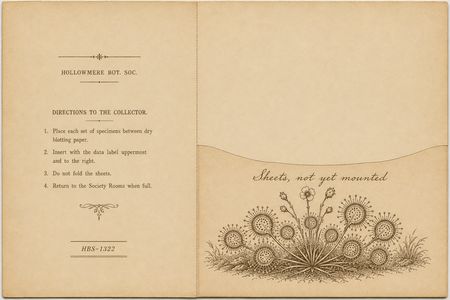
Marbled paper folio insert with a pocket
Cabinet card with a printed border and mounted plate
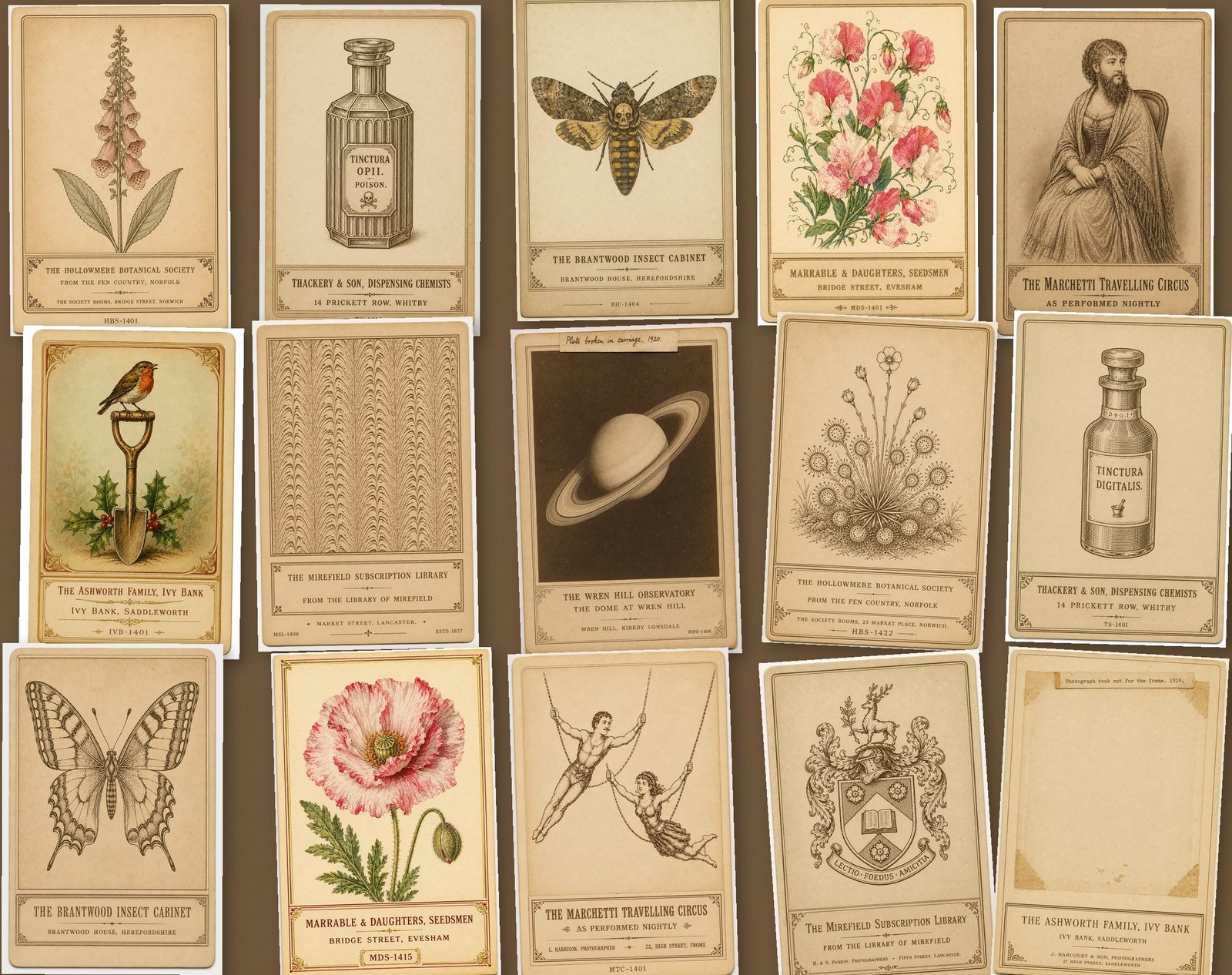
Fifteen cabinet cards from fifteen different invented sources arranged in a grid, showing botanical, entomological, astronomical, circus, apothecary and library subjects

Eight sources ship with it

Not one look. Eight institutions.

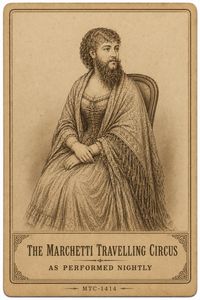
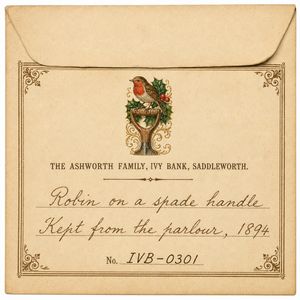
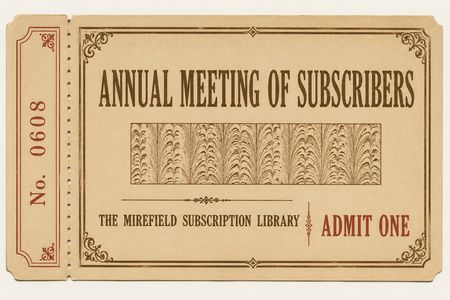
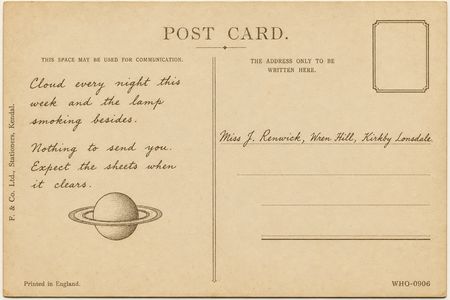
A fen botanical society. A dispensing chemist. A travelling circus. An insect cabinet. An observatory. A seed merchant. A subscription library. A Christmas household.

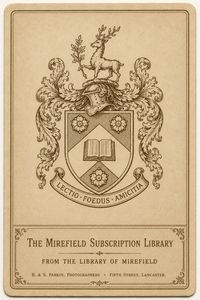
Each with its own custodian, handwriting, paper, catalogue prefix and twenty-five specimens — and the handbook shows you how to build a ninth of your own.

The eight, in their own words

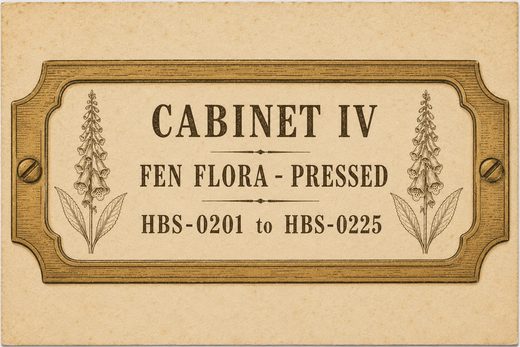
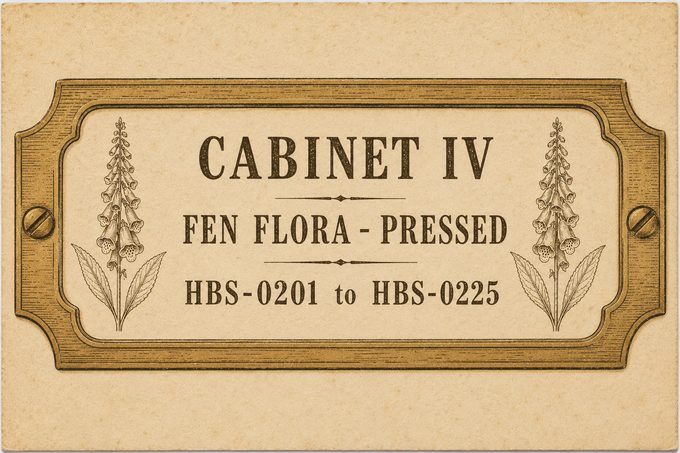
Brass drawer label reading Cabinet IV, Fen Flora — Pressed, HBS-0201 to HBS-0225, with engraved foxgloves either side
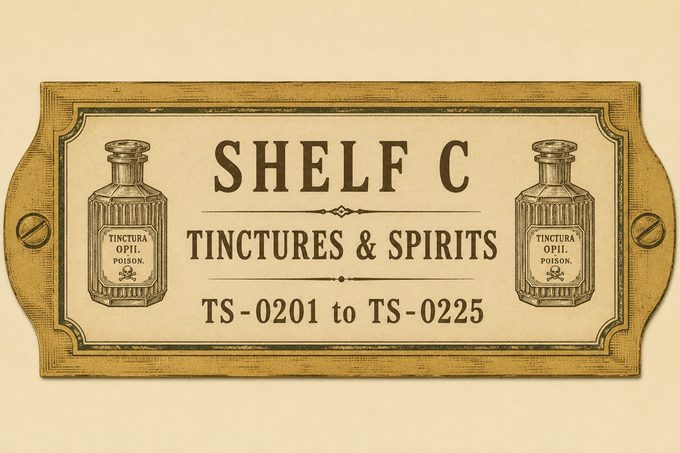
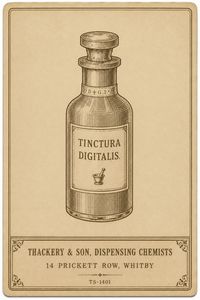
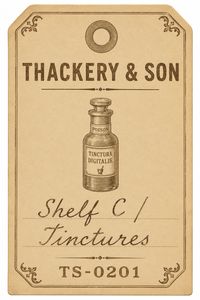
Drawer label reading Shelf C, Tinctures and Spirits, TS-0201 to TS-0225, with engraved apothecary bottles
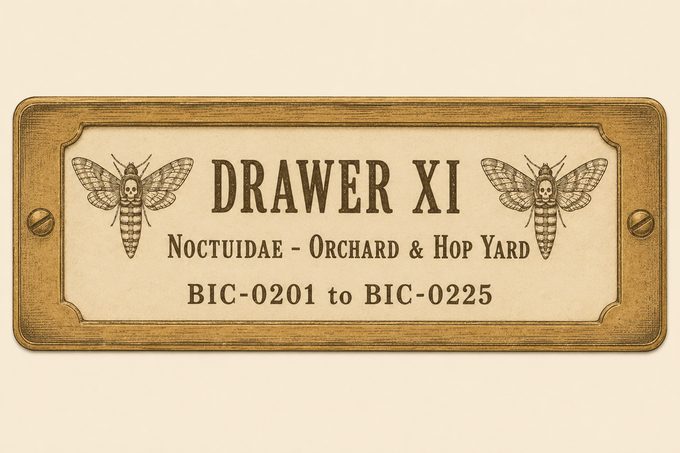
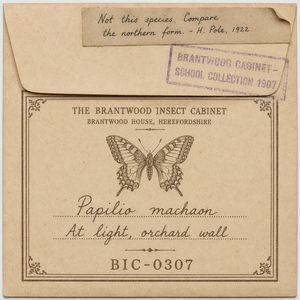
Drawer label reading Drawer XI, Noctuidae — Orchard and Hop Yard, BIC-0201 to BIC-0225, with two engraved moths
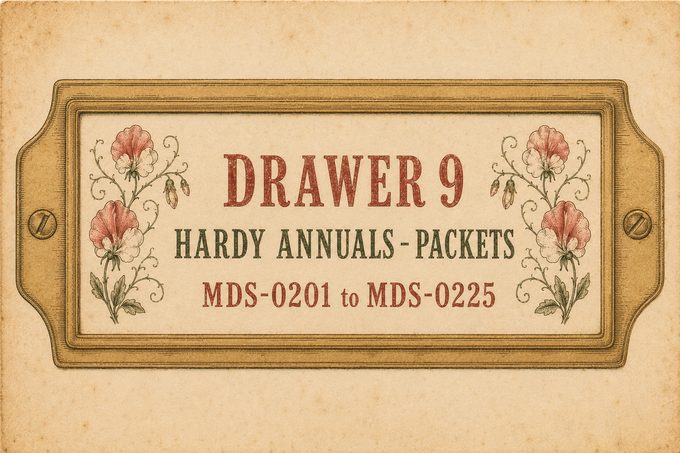
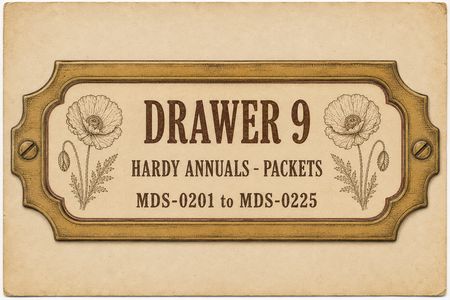
Drawer label reading Drawer 9, Hardy Annuals — Packets, MDS-0201 to MDS-0225, printed in red with sweet peas
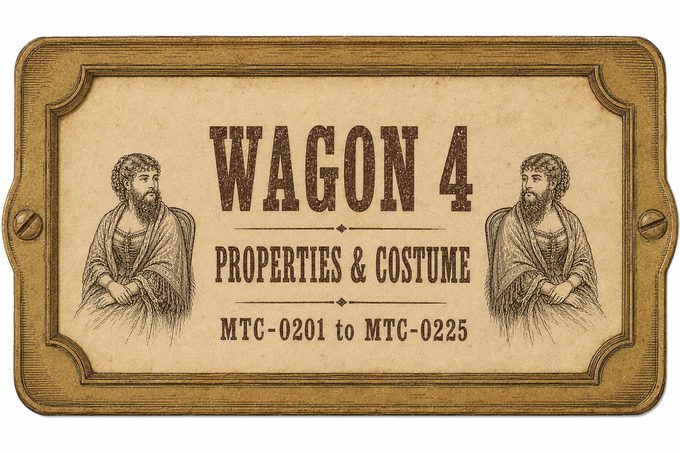
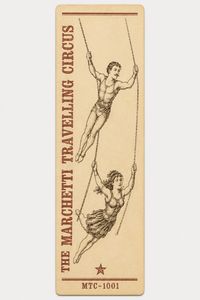
Drawer label reading Wagon 4, Properties and Costume, MTC-0201 to MTC-0225, with two engraved circus portraits
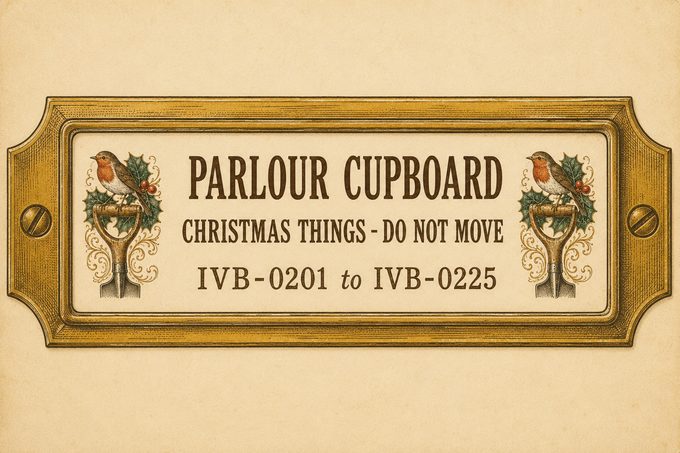
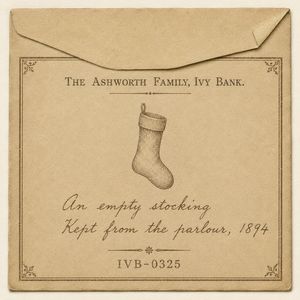
Drawer label reading Parlour Cupboard, Christmas Things — Do Not Move, IVB-0201 to IVB-0225, with a robin and holly
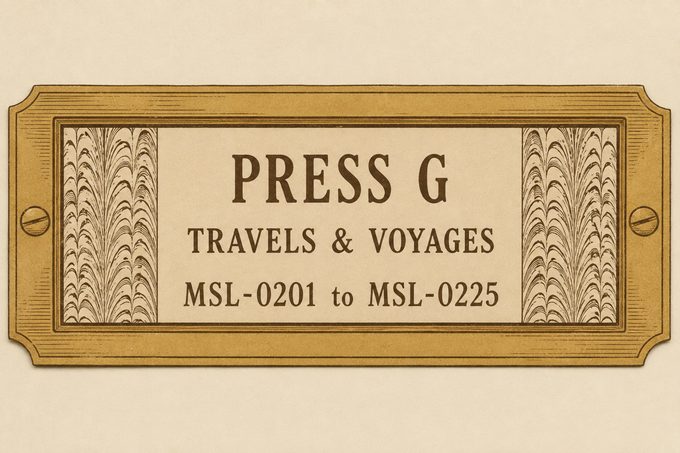
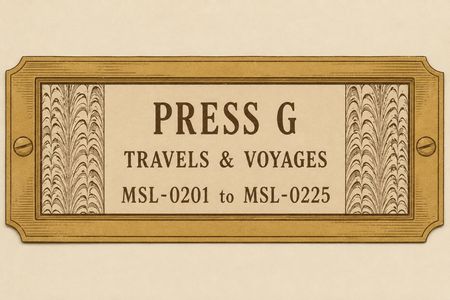
Drawer label reading Press G, Travels and Voyages, MSL-0201 to MSL-0225, framed in marbled paper
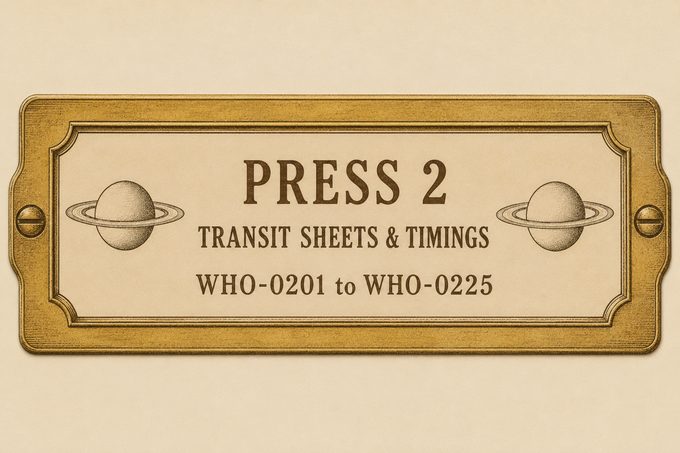
Drawer label reading Press 2, Transit Sheets and Timings, WHO-0201 to WHO-0225, with two engraved planets

Eight labels, eight catalogue prefixes, eight sets of motifs — and every one of them numbers its own drawer. Nothing here is shared but the method.

A shop's worth, from one system

Every one of these was made the same way.

Forty-five pieces, drawn from all fifteen worked folios in the Vault — every institution, every object type. Hover to stop the rows.

You do not write these prompts

The Provenance Desk writes them for you.

One HTML file. Opens in your browser, offline, forever. No account with us, no install, no subscription.

Step one

Pick a source, an object and a specimen from three menus. The Desk assembles the rules, the Provenance Block and the object template for you.

Step two

Press Copy, paste into a chat. The first prompt carries everything; every prompt after it is short, because the chat already knows the institution.

Step three

Switch to Folio run. It steps you through all fourteen objects in order, remembers which you have made, and hands you the file name for each one.

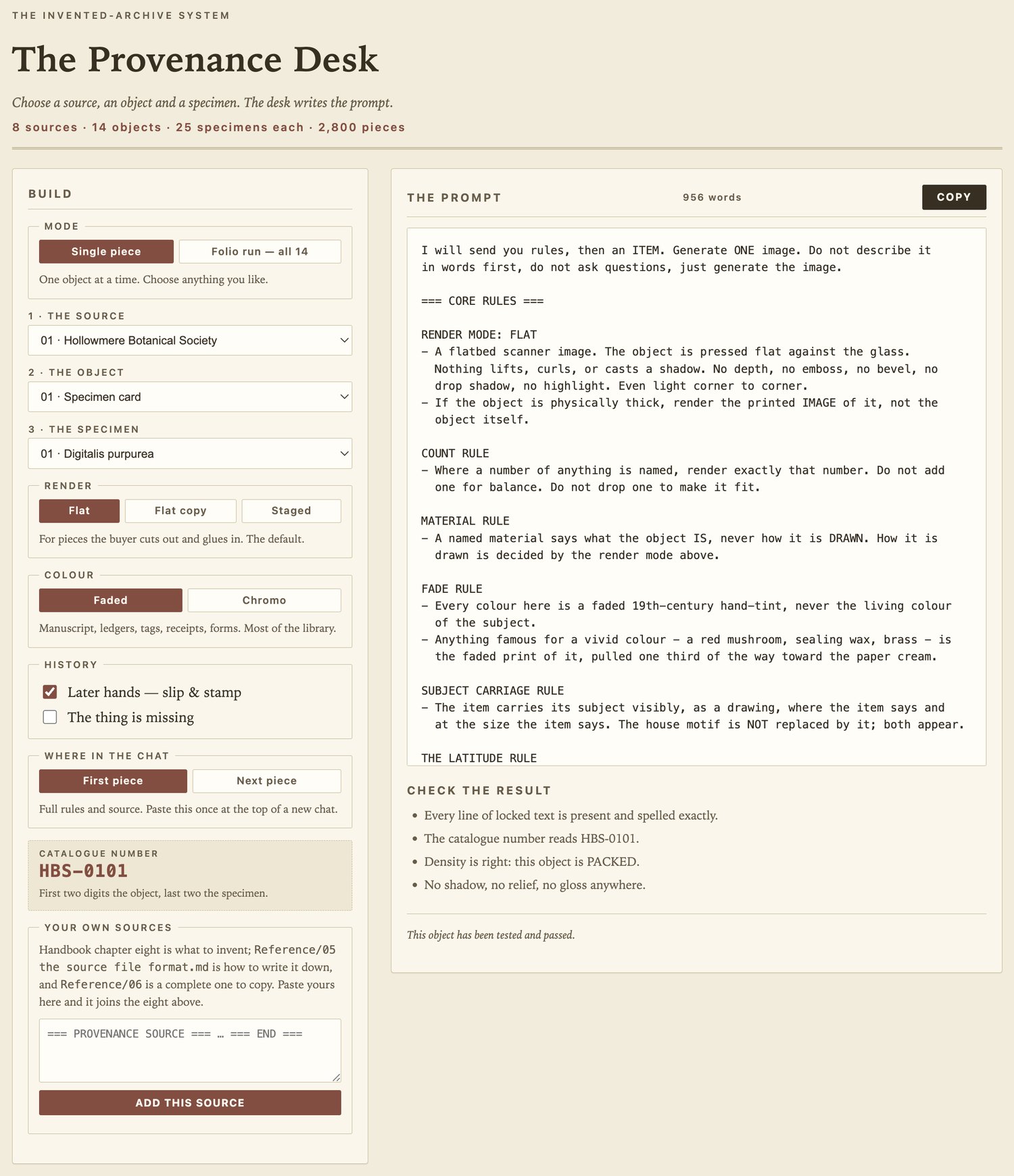
The Provenance Desk open in a browser: on the left, menus for mode, source, object, specimen, render, colour and history, with the catalogue number HBS-0101 beneath them; on the right, the generated 956-word prompt and a Check the result list.
The Desk, as it opens. Nothing to install, nothing to sign into.

Beside every prompt it shows the Check the result list — what must be true of the image before you use it. That is how you judge output instead of hoping.

Off the screen

Made to be printed, cut and glued.

A printed A4 sheet of ephemera part-cut with scissors resting on it and three cut pieces set aside
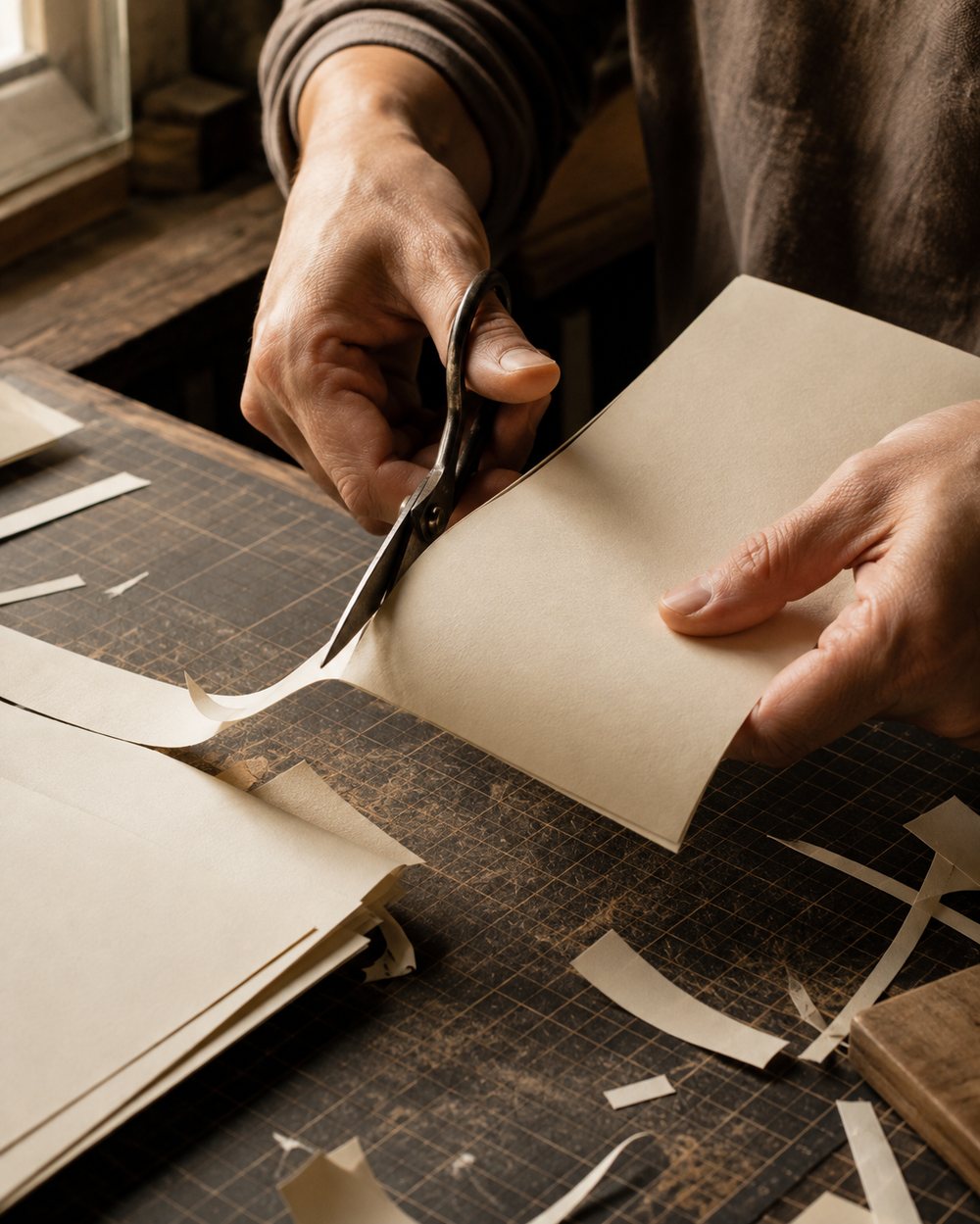
Two hands trimming a sheet of cream paper with steel scissors over a worn cutting mat, offcuts scattered around
A printed luggage tag held between finger and thumb, showing the thickness of the paper at the edge
Three printed pieces glued into an open junk journal, one lifting slightly at the corner

Printed, trimmed, held, glued in. Tap any of them to see it full size.

Output runs about 1024 × 1536 pixels — 3.4 × 5.1 inches at a true 300 DPI. Superb at tag and card sizes, above 400 DPI at trading-card size. Provenance ships ready-made A4 gang sheets so a whole folio prints on one page at true size.

And it tells you plainly what these are not: not full-page background papers. Nothing in the product pretends otherwise.

What lands in your download

Everything, in one folder, working offline.

IncludedWhat it is
The Provenance Deskthe prompt builder — single piece and folio run, with progress and file names
The Handbookeleven chapters: the rules, the four generating rules, density, absence, printing, building your own ninth source
Eight sources2,800 distinct pieces — 14 objects × 25 specimens × 8 institutions
A complete worked archivefourteen finished pieces plus four A4 print sheets, to use or to judge your own against
The whole system as plain textcore rules, object templates and every source — editable, yours to change
Commercial licencesell what you make: digital kits, printed kits, finished journals. No credit required
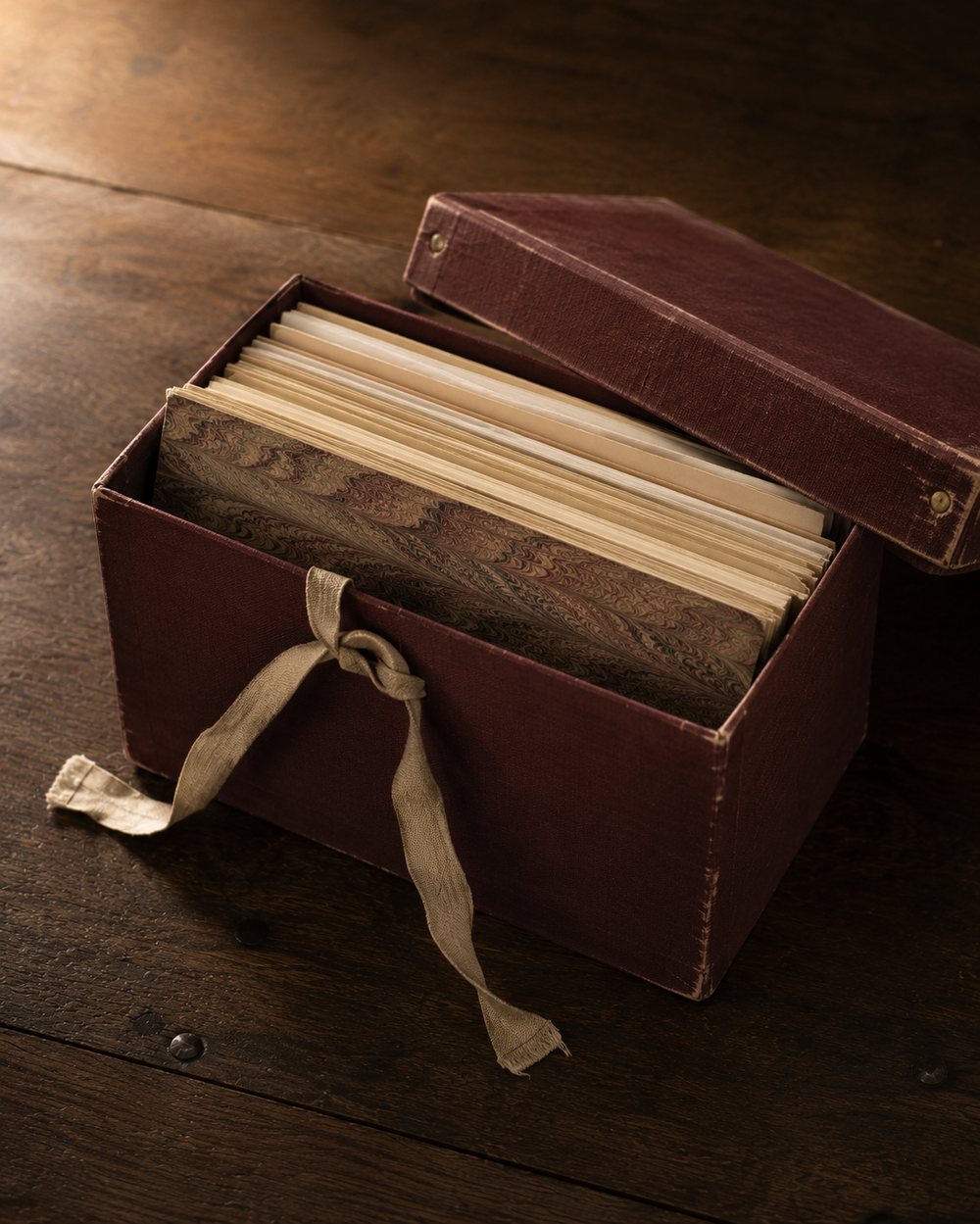
A cloth-covered archive document box on dark oak, its lid lifted off and set behind it, faded cotton tape hanging loose, stacked cream paper and a marbled portfolio just visible inside

Included, not upsold

Bonus: The Etsy Desk

Eight chapters on everything between having the pieces and having the sale — written to be sold separately, included here instead.

  • One archive, five products. The same fourteen files arranged five ways
  • Fourteen photograph set-ups — one per object, with the results shown
  • Titles and tags built on Etsy's own published limits
  • Packing the download — naming, folders, the PDF for the buyer's file
  • The paper bridge — printing, ageing, cutting and posting a physical kit
Specimen card photographed on a scrubbed table with a bone folder and scissors out of focus
Seed envelope photographed on bare wood with loose seeds beside it
Circus admission ticket on dark wood with more tickets fanned beneath
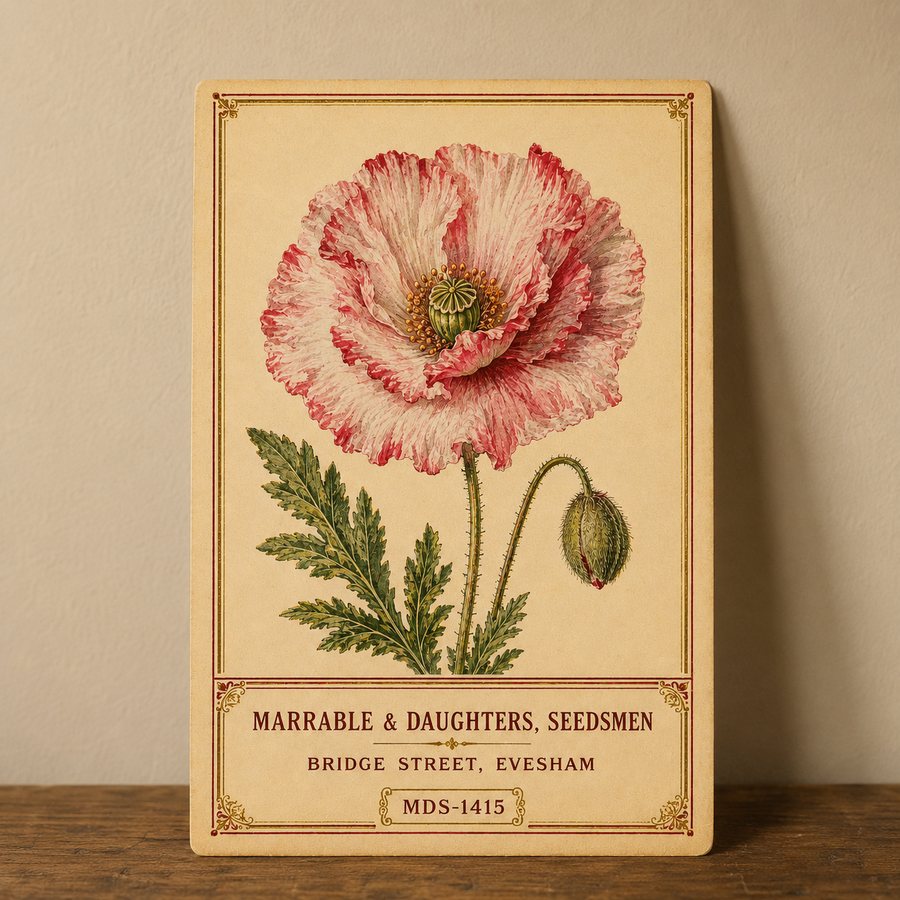
Cabinet card propped upright against a plain wall on a wooden shelf

Listing photographs made with the set-ups in the bonus.

This is for you if

  • You sell — or are about to sell — digital or printed ephemera, journal kits, collage papers or scrapbook supplies
  • You are tired of listings that look like everybody else's
  • You already use ChatGPT and want it to produce something coherent
  • You would rather own a system you can edit than rent a tool

This is not for you if

  • You want full-page background papers — this makes cards, tags and slips
  • You want a button that builds a shop for you
  • You are unwilling to look at an image and judge it against a list
  • You want to resell the system itself — the licence does not allow it
30

Thirty days. No questions.

Use it, print from it, run a whole folio. If it does not do what this page says, ask and you get your money back — and the images you already made stay yours either way.

The invented-archive system

Provenance

Everything above, one download, yours to keep.

$17

one payment · no subscription

Get instant access

Delivered by WarriorPlus · Mac, Windows, iPad · 30-day guarantee

2,800 pieces8 sources14 objectsThe Desk 11-chapter handbookEtsy Desk bonusCommercial licenceOffline

Before you ask

Questions

Do I need to pay for anything else to use it?

You need a chat account that can generate images — the one most people already have. Nothing else. No software to install, no account with us, no server, no monthly anything. The Desk is an HTML file that runs in your browser with the internet switched off.

Can I sell what I make?

Yes. Digital kits, printed kits, finished journals, physical products you post — all of it, no credit required. What you may not do is resell Provenance itself, or sell resale rights to it.

Is this AI?

Yes, and it says so everywhere. Provenance is a prompt system: it writes the instructions, your chat generates the images. The bonus also covers how to disclose AI-generated work in a listing properly, because that is now part of selling this kind of product.

How big are the images? Can I print them?

About 1024 × 1536 pixels — 3.4 × 5.1 inches at a true 300 DPI. Ideal for tags, cards, slips, tickets and labels; above 400 DPI at 2.5 × 3.5in. They are not full-page papers, and the product says so plainly rather than letting you find out at the printer.

Will my sets look like everyone else's who buys this?

Eight sources ship with the system, so a buyer who uses them straight shares those institutions with other buyers. That is why chapter eight of the handbook and a full format reference are included: they show you how to build a ninth source of your own — your own institution, custodian and catalogue prefix — which nobody else has.

I have never used prompts like this. Is it hard?

You pick three menu items and press Copy. The difficulty is not the prompt, it is judging the result, and the Desk puts the checklist next to every prompt for exactly that reason.

What if it does not work for me?

Thirty days, no questions asked.
One institution. Fourteen objects.
About an hour.

Then another, and another, until your shop is full of things that look like they belong together — because they do.

Get Provenance — $17

Instant download · 30-day money back

Provenance — 2,800 pieces, eight invented sources, the Desk and the handbook.

Get Provenance — $17